

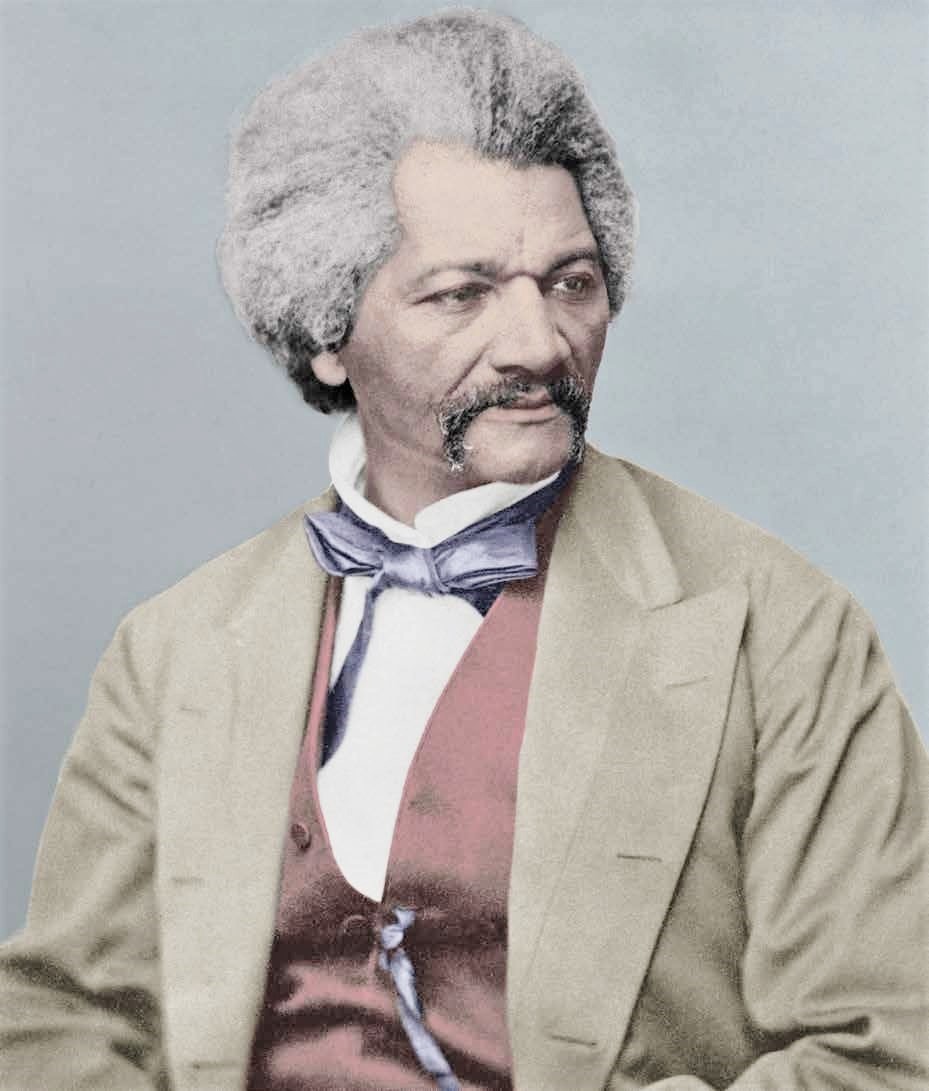
Abolitionist and former slave Frederick Augustus Washington Bailey (February 1818 to February 20, 1895) took the name Frederick Douglass after he escaped from slavery. (undated photo)
“What to the Slave Is the Fourth of July” Frederick Douglass’ Searing 1852 Oratory has Relevance today
“What have I, or those I represent, to do with your national independence? Are the great principles of political freedom and of natural justice, embodied in that Declaration of Independence, extended to us (slaves)?… What, to the American slave, is your 4th of July? I answer; a day that reveals to him, more than all other days in the year, the gross injustice and cruelty to which he is the constant victim.” –Frederick Douglass, July 5, 1852.
CAPTION: An Oratory of “What to the Slave is the Fourth of July” given in 1852 by Frederick Douglass as read by Ossie Davis. (Smithsonian Folkways Recordings Released on: 2009-06-30, provided to YouTube)
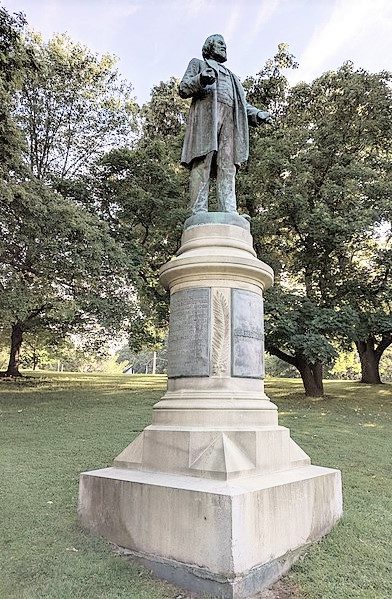
The Frederick Douglass statue as it once stood in the Frederick Douglass Memorial Park in Rochester, NY. It was vandalized in 2020 in the aftermath of protests after the murder of George Floyd in Minneapolis, MN that spread nationwide. (ETEnlightener.com)
The newly established English named the continent America. They were in the process of celebrating their 76th year of freedom from Great Britain, after signing the Declaration of Independence on July 4th, 1776. At that time, the decree of freedom from colonial rule was not extended to slaves.
The Rochester Ladies’ Anti-Slavery Society wanted Frederick Douglass, an abolitionist and former slave, to speak at their July 4th, 1852, event. Douglass accepted the invitation but would not speak at an Independence Day celebration.
Douglass honored the invitation by delivering his message on July 5th, 1852, the next day.
It is reported that Douglass spoke to an estimated 600 free, white people in Corinthian Hall in Rochester, New York. It took Douglass a mere three weeks to pen the 3,376 words over time, was titled “What to the Slave is the Fourth of July.”
Many historians consider it to be the sdfsdfsf. “What to the Slave is the Fourth of July” can be read in its entirety here, Frederick Douglass’ speech on July 5, 1852; or listened to as read by freedom fighter and famed actor Ossie Davis (19xx-20xx) on the YouTube link provided above.
The Frederick Douglass Monument was installed in Rochester, New York in 1899. The statue was commissioned by African-American activist John W. Thompson and sculpted by Sidney W. Edwards. It is recognized as the first statue in the United States to memorialize a specific African-American person, according to Visualising Slavery: ArtAcross the African Diaspora.
Over its existence, the statue has been moved many times. The last time was in 2019 when the statue was moved to be the centerpiece in the Frederick Douglass Memorial Plaza, which is near the last residence of Douglass.
In the wake of the 2020 protests sparked by the murder of George Floyd by police in Minneapolis, MN, the statue of Douglass was torn down on July 5, 2020, the 168th anniversary of his speech. The head of the organization responsible for the memorial speculated it was vandalized in response to the removal of Confederate monuments.
This is one of those rare opportunities to learn of a historic event from someone who was there over 65 years ago! OAK RIDGE, Tenn. (April 25, 2021) – Ernestine Avery was just 14 years old when she…
A.R. Wheeler & Son funeral home was the largest in East Tennessee, established in 1922 into the 1940s, met its demise through Urban Renewal aka Urban Removal. KNOXVILLE, TN (February 2021) – A.R. Wheeler & Son was…
Leon’s Thriftway, the country’s oldest Black-owned grocery store located in Kansas City, Missouri, has closed its doors marking the end of 51 years in business. Leon Stapleton, the store’s owner, is now 93-years old and says the main…
Selma, AL (March 2021) – Over a half-century and 10 days have passed since peaceful marchers were met with brutal police violence On March 7, 1965, on the Edmund Pettus Bridge in Selma, Alabama. The nation then and…
By Patricia Williams Today March 10th is Harriet Tubman Day, a National holiday signed into law on March 9, 1990, by President George HW Bush. This is the date of her death. Born into slavery her birthdate is unknown….
KCean, Board Chair, Civil Rights Legend, History Maker Dies By Franklin Tate She came to Knoxville College (KC) on a scholarship from Mayflower, Arkansas, graduated, and became the first black student to enter any medical school in…